If you spend time online—chatting, gaming, or scrolling social media—you’ve probably seen someone type “AFK” and disappear.
That’s why many people search for AFK meaning in text: they want a quick, clear explanation without tech jargon. AFK is one of those short internet terms that feels simple but is used in many different ways across chats, workspaces, and social platforms.
Understanding AFK helps you avoid confusion, reply correctly, and sound more natural in digital conversations. Whether you’re texting a friend, gaming late at night, or replying in a work chat, knowing when and how to use AFK matters.
In this guide, we’ll break down the meaning, origin, real-life usage, common mistakes, and why this term is still popular today—especially with Gen Z and millennials.
1️⃣ Meaning & Definition
AFK stands for “Away From Keyboard.”
In the simplest words, it means someone is not available right now.
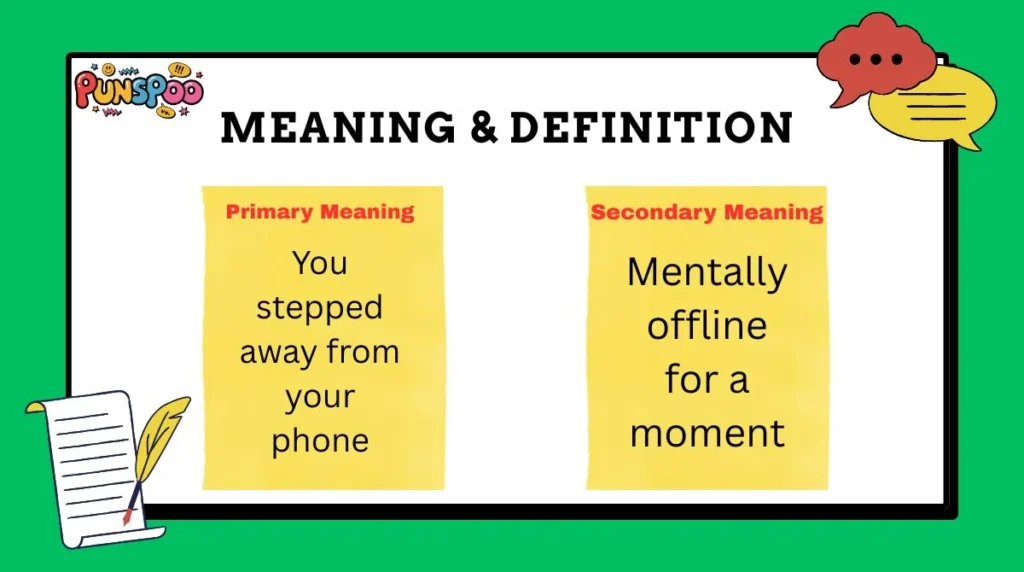
Primary Meaning
AFK is used to tell others that you are temporarily away and cannot respond immediately.
- You stepped away from your phone
- You left your computer for a short time
- You’re busy but will return soon
Secondary Meaning
Today, AFK doesn’t always mean a physical keyboard. It can also mean:
- Away from phone 📱
- Busy doing something else
- Mentally offline for a moment
For example, someone might say “AFK for dinner” even though they’re on mobile. The core idea stays the same: not available at the moment, but not gone forever.
AFK is usually temporary. That’s what separates it from words like “offline” or “gone.”
2️⃣ Origin & Background of the Term
The term AFK comes from early computer and online gaming culture. In the 1990s, multiplayer PC games and chat rooms required players to sit at a keyboard to interact. When someone needed a break, they typed “AFK” so others knew they weren’t ignoring them.
Over time:
- Gamers used it in team chats
- IRC and forums adopted it
- Messaging apps made it mainstream
As smartphones replaced keyboards, the phrase stayed—even though the literal meaning changed. AFK evolved from a technical notice into a casual digital habit. Today, it’s part of everyday internet language across the world.
3️⃣ What Does It Really Mean in Daily Life?
In real life, AFK is more about politeness and clarity than technology.
When someone says AFK, they’re usually saying:
- “Don’t worry, I’ll reply later”
- “I’m busy, not ignoring you”
- “Give me a few minutes”
Emotionally, AFK helps reduce misunderstanding. Without it, silence can feel rude or confusing. With it, communication feels smoother and more human.
In friendships, AFK shows respect.
In work chats, it sets expectations.
In gaming, it avoids penalties or frustration.
So beyond the letters, AFK is about managing presence in a digital world.
4️⃣ Usage in Different Contexts
Casual Chatting
- “AFK for 10 mins, back soon.”
- “Sorry, was AFK.”
Professional / Workplace
- “AFK until 3 PM for a meeting.”
- “Currently AFK, will respond shortly.”
Social Media Captions
- “AFK, touching grass 🌿”
- “AFK mode: activated.”
Text Messages
- “AFK rn, call you later.”
- “Was AFK, what’s up?”
Each context changes the tone, but the meaning stays clear.
5️⃣ Meaning Across Social Media Platforms 📱
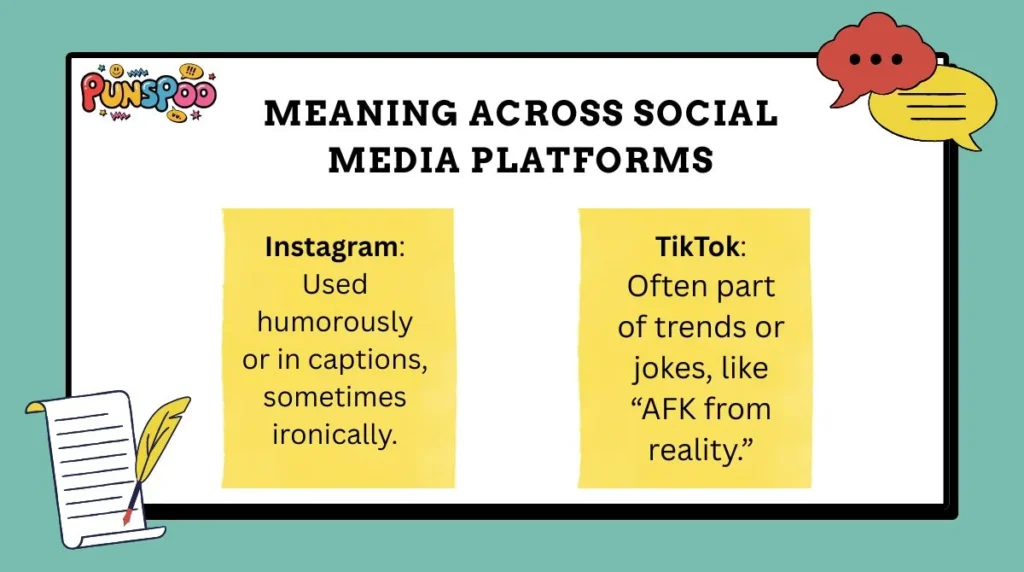
WhatsApp:
AFK means temporarily unavailable, often polite and practical.
Instagram:
Used humorously or in captions, sometimes ironically.
TikTok:
Often part of trends or jokes, like “AFK from reality.”
Snapchat:
Means inactive for a short time, not ghosting.
Same word, different vibe—but always temporary absence.
6️⃣ Technical, Scientific & Other Meanings
Outside texting, AFK can appear in:
- Gaming: Player inactive but logged in
- IT/Tech: User not interacting with system
- Productivity tools: Status indicator
There are no major medical or scientific meanings of AFK. Its usage is mostly digital and cultural.
7️⃣ Common Misunderstandings & Wrong Usage ❌
Many people misunderstand AFK as:
- ❌ Gone forever
- ❌ Ignoring on purpose
- ❌ Angry or upset
Wrong usage examples:
- Using AFK for long-term absence (days)
- Using it in very formal documents
AFK is short-term and informal—keep that in mind.
8️⃣ Similar Words & Alternatives
| Word | Meaning | Usage Difference |
|---|---|---|
| BRB | Be right back | Very short break |
| Offline | Not connected | Longer absence |
| Busy | Occupied | No return time |
| Away | Not available | Neutral tone |
| DND | Do not disturb | Requests no messages |
9️⃣ Difference Between AFK & Similar Terms
- AFK vs BRB: AFK can be longer
- AFK vs Offline: AFK implies return
- AFK vs Busy: AFK is more casual
AFK sits in the middle—temporary and informal.
🔟 How to Use It in a Sentence
💬 “AFK for lunch 🍔”
💬 “Going AFK, back soon.”
💬 “Sorry, was AFK earlier.”
💬 “AFK rn, text you later 😊”
1️⃣1️⃣ How to Reply When Someone Uses This Word
Casual replies:
- “No worries 👍”
- “Okay, take your time”
Dating/chat:
- “Cool, talk later 😊”
- “Alright, I’ll wait”
Work:
- “Thanks for the update.”
1️⃣2️⃣ Meaning in Online Dating & Social Conversations ❤️
In dating, AFK usually means:
- Busy, not disinterested
- Short break, not ghosting
Gen Z often pairs AFK with emojis or humor to keep things light and reassuring.
1️⃣3️⃣ Popularity & Trend Over Time 📈
AFK has stayed popular due to:
- Gaming culture
- Remote work
- Constant messaging habits
Search interest rises during gaming events and online trends.
1️⃣4️⃣ Why This Word Is Trending in 2026
AFK is trending because:
- Digital burnout is real
- “Offline moments” are trendy
- Memes and reels use it creatively
It represents balance between online and real life.
1️⃣5️⃣ Pros & Cons of Using This Term
Pros
- Clear and quick
- Polite and casual
- Widely understood
Cons
- Too informal for some settings
- Can confuse non-tech users
FAQs
Q1: Is AFK rude?
No, it’s usually polite and helpful.
Q2: Can AFK be used professionally?
Yes, in casual work chats.
Q3: Does AFK mean ignoring?
No, it means temporary absence.
Q4: Is AFK outdated?
No, it’s still widely used.
Q5: Can AFK mean offline?
Not exactly—AFK implies return.
Conclusion
Understanding the AFK meaning in text helps you communicate clearly in today’s fast-paced digital world.
AFK is more than gaming slang—it’s a simple way to show respect, set expectations, and avoid misunderstandings.
Whether you’re chatting with friends, dating online, or working remotely, this small term plays a big role in digital etiquette.
Its flexibility, simplicity, and emotional clarity explain why it continues to trend across platforms. Used correctly, AFK keeps conversations smooth and human—even when you’re temporarily away.

“I’m Maria James, weaving playful word-magic into every pun I craft at PunsPoo. I love turning language upside down and making you smile one clever twist at a time.”