In today’s fast-paced digital world, acronyms and slang dominate texting and social media conversations. One such term that often pops up is “FWB.”
If you’ve ever seen it in a message or social media comment and wondered what it really means, you’re not alone.
Many people search for “FWB meaning in text” to clarify its significance before responding or engaging.
Understanding this term can help you navigate casual conversations, dating chats, and online interactions without confusion.
In this article, we’ll break down FWB in simple terms, explore its origin, everyday usage, and how it differs across social platforms.
By the end, you’ll be confident using it appropriately, avoiding misunderstandings, and staying updated with modern texting slang.
1️⃣ Meaning & Definition
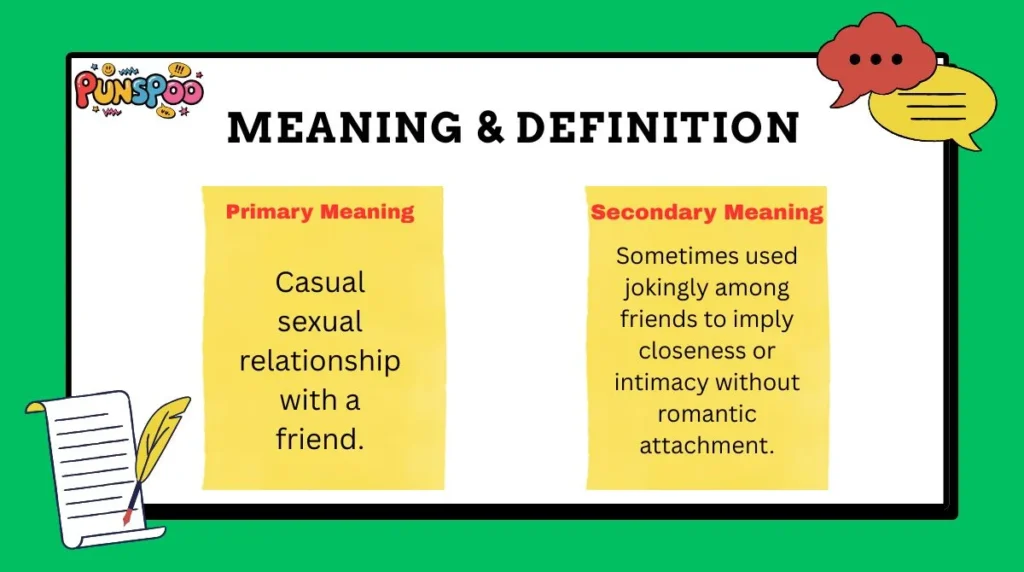
FWB stands for “Friends With Benefits.” At its core, it describes a relationship between two people who are friends but also engage in casual sexual activity without the emotional commitment of a romantic relationship.
- Primary meaning: Casual sexual relationship with a friend.
- Secondary meaning: Sometimes used jokingly among friends to imply closeness or intimacy without romantic attachment.
Example in real life: Two friends hang out regularly, text daily, and may spend nights together, but they’re not “dating.”
It’s important to note that FWB is consensual and based on mutual understanding. Misunderstanding can lead to confusion or hurt feelings, so clarity is key.
2️⃣ Origin & Background of the Term
The term “Friends With Benefits” started gaining popularity in the late 1990s and early 2000s. It was first widely recognized through movies, TV shows, and online dating communities.
- Slang origin: Likely emerged from American youth culture.
- Media influence: Movies like Friends with Benefits and No Strings Attached popularized the phrase.
- Cultural context: It reflects modern attitudes toward casual relationships where emotional attachment isn’t a priority.
Over time, the abbreviation FWB became common in texts and online messaging, saving time and adding a discreet way to refer to such relationships.
3️⃣ What Does It Really Mean in Daily Life?
In everyday life, FWB isn’t just about intimacy—it’s about flexibility, honesty, and friendship. People use it to enjoy companionship without the pressures of romance.
- Emotional meaning: Often, it’s about trust and comfort with someone you already know.
- Practical meaning: Avoids traditional relationship labels while keeping connections fun.
For some, FWB is a temporary arrangement; for others, it can last months or even years. The key is clear communication to avoid emotional confusion.
4️⃣ Usage in Different Contexts
Casual chatting:
- “I think we’re basically FWB 😅”
Professional/workplace: - Rarely used; inappropriate in formal settings.
Social media captions: - “Weekend vibes with my FWB 🫶”
Text messages: - “So… are we just FWB or is this more?”
In short, context matters. Using FWB among friends or online is common, but it’s rarely suitable in formal or professional scenarios.
5️⃣ Meaning Across Social Media Platforms 📱
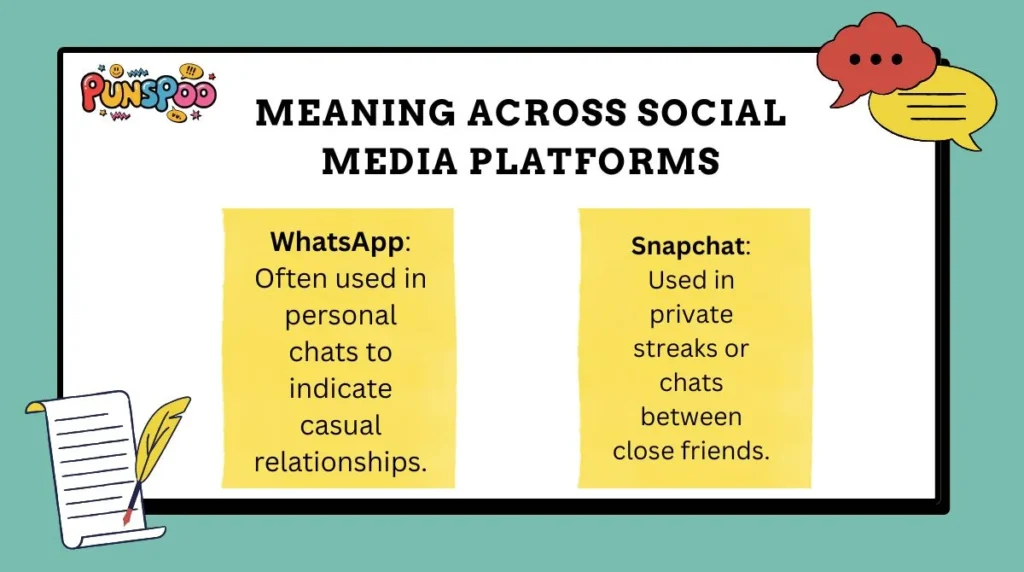
- WhatsApp: Often used in personal chats to indicate casual relationships.
- Instagram: Appears in memes, captions, and comments humorously or seriously.
- TikTok: Trendy in videos explaining dating culture or funny scenarios.
- Snapchat: Used in private streaks or chats between close friends.
Each platform slightly shifts the tone—from jokingly casual to more serious—depending on the user.
6️⃣ Technical, Scientific & Other Meanings
While FWB primarily means Friends With Benefits, in rare technical contexts, it could be:
- Engineering: FWB = “Full-Wave Bridge” (circuit design)
- Medical: No standard usage; rarely appears in medical abbreviations.
- Aviation: No common meaning.
But for everyday texting and social media, Friends With Benefits remains the dominant meaning.
7️⃣ Common Misunderstandings & Wrong Usage ❌
- People often assume FWB = casual dating, but not all FWB relationships involve dating.
- Some confuse it with just being friends, missing the “benefits” part.
- Misuse can lead to emotional hurt if one person expects romance.
Tip: Always clarify boundaries when someone uses FWB in texts or chats.
8️⃣ Similar Words & Alternatives
| Term | Meaning | Difference from FWB |
|---|---|---|
| Casual dating | Dating without commitment | Focuses on emotional connection less than FWB |
| Hookup | One-time sexual encounter | Usually no friendship involved |
| Open relationship | Romantic partners with sexual freedom | Has romantic commitment, unlike FWB |
| Situationship | Undefined relationship | Ambiguous, may evolve emotionally |
| Friends + sex | Informal way to say FWB | Less recognized, slangier |
9️⃣ Difference Between FWB & Similar Terms
FWB vs Hookup: FWB implies ongoing friendship; hookups are usually one-time.
FWB vs Casual Dating: Casual dating may involve emotional connection; FWB is mainly physical with friendship.
FWB vs Situationship: Situationships often blur boundaries, while FWB is clearly defined.
🔟 How to Use It in a Sentence
💬 Example 1: “We’re FWB, so let’s keep it chill 😎”
💬 Example 2: “Honestly, I’m not ready for a relationship, but FWB works.”
💬 Example 3: “Are we FWB or more? Just curious 🤔”
💬 Example 4: “She’s my FWB, but we hang out like friends too.”
1️⃣1️⃣ How to Reply When Someone Uses This Word
- Casual: “Got it, clear boundaries 😅”
- Playful: “Haha FWB squad, noted 🫶”
- Curious: “Okay, what does FWB mean for us?”
Always be honest and maintain clarity to avoid confusion.
1️⃣2️⃣ Meaning in Online Dating & Social Conversations ❤️
Among Gen Z and Millennials, FWB is trendy:
- Seen as a modern alternative to traditional dating
- Offers flexibility and less pressure
- Often jokingly referenced in memes or casual conversations
It reflects a shift toward honest, consent-based interactions without societal pressure.
1️⃣3️⃣ Popularity & Trend Over Time 📈
- First rose in the 2000s through movies and media
- Surged with dating apps and texting culture
- Google Trends and social media usage show steady growth in searches, peaking around casual dating trends
1️⃣4️⃣ Why This Word Is Trending in 2026
- Meme culture keeps it alive on TikTok and Instagram
- Increased online dating and texting habits
- Easy shorthand for casual yet consensual arrangements
It’s concise, relatable, and perfectly fits fast digital communication.
1️⃣5️⃣ Pros & Cons of Using This Term
Pros:
- Clear about boundaries
- Trendy and widely recognized
- Casual and flexible
Cons:
- Can cause emotional confusion
- Misunderstood if context isn’t clear
- Not suitable for professional or formal environments
FAQs
Q1: Is FWB always sexual?
A: Usually yes, but sometimes jokingly used without sexual context.
Q2: Can FWB turn into a relationship?
A: Yes, but only with mutual feelings and communication.
Q3: Is it okay to have multiple FWBs?
A: Only if all parties are aware and consent.
Q4: Can teens use the term?
A: It’s common in slang, but discussions about relationships should be age-appropriate.
Q5: Is FWB safe?
A: Emotional and physical safety require communication, boundaries, and consent.
Conclusion
The term FWB—short for Friends With Benefits—is more than just a text abbreviation. It reflects modern relationship dynamics, casual interactions, and clear boundaries.
Understanding its meaning, origin, and proper usage helps prevent misunderstandings and makes conversations smoother in social media, texting, or dating contexts.
While it’s trendy, always remember that honesty and consent are key.
Whether joking with friends or navigating a real-life FWB situation, knowing what it truly means keeps interactions respectful, fun, and safe.

“I’m Maria James, weaving playful word-magic into every pun I craft at PunsPoo. I love turning language upside down and making you smile one clever twist at a time.”