In today’s fast-paced digital world, texting and chatting have created a language of their own. One abbreviation you might have seen a lot is “HRU”.
Short, snappy, and easy to type, HRU has become a staple in casual messaging, social media captions, and even online dating conversations.
People often search for it because they encounter it in texts or social media posts and wonder what it actually means.
Whether you’re a teen chatting with friends, a professional receiving quick messages, or someone exploring online culture, understanding HRU is essential.
In this article, we’ll break down the meaning, origin, usage, and trends of HRU in a simple, clear way, with examples to make it practical for everyday life.
1️⃣ Meaning & Definition
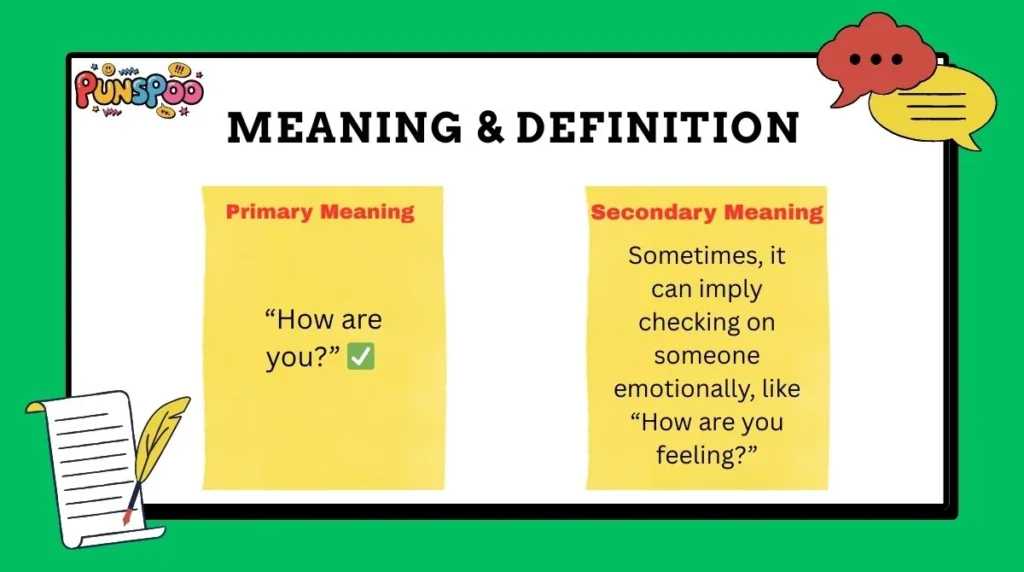
HRU is an abbreviation commonly used in texting and online chats.
- Primary Meaning: “How are you?” ✅
- Secondary Meaning: Sometimes, it can imply checking on someone emotionally, like “How are you feeling?”
Essentially, HRU is a casual, friendly way to ask someone about their well-being without typing the full sentence. It’s quick, informal, and widely understood in chat environments.
Example in real life:
- Friend: HRU?
- You: I’m good, thanks! How about you?
It saves time and keeps conversations light, especially in fast-moving digital chats.
2️⃣ Origin & Background of the Term
The abbreviation HRU originates from SMS texting culture in the early 2000s, when people aimed to type faster using phones with limited keyboards. It grew popular with instant messaging apps like AIM, MSN Messenger, and later WhatsApp and Facebook Messenger.
- Slang roots: It’s informal shorthand, like LOL (“laugh out loud”) or BRB (“be right back”).
- Digital efficiency: Users wanted a faster way to ask “How are you?” without interrupting the chat flow.
Its simplicity helped it persist into social media culture and texting today, making it a modern classic in online slang.
3️⃣ What Does It Really Mean in Daily Life?
HRU isn’t just a greeting—it carries emotional undertones. When someone asks HRU:
- It can show care or concern.
- In casual chats, it’s a conversation starter.
- Among friends, it may even signal interest or friendliness.
Unlike formal “How are you?” HRU is relaxed and approachable. It’s also versatile; you can use it to check in with a friend, initiate a conversation with a crush, or even lighten the mood in a professional chat (if appropriate).
4️⃣ Usage in Different Contexts
Casual chatting:
- HRU? 🙂
- Doing anything fun today?
Professional/workplace:
- Less common, but sometimes: HRU? in a quick Slack message to a teammate you know well.
Social media captions:
- “HRU guys? 🌟 Just chilling at home!”
Text messages:
- Friend: HRU?
- You: All good! How about you?
HRU is generally casual and should be avoided in formal emails unless the environment is very relaxed.
5️⃣ Meaning Across Social Media Platforms 📱
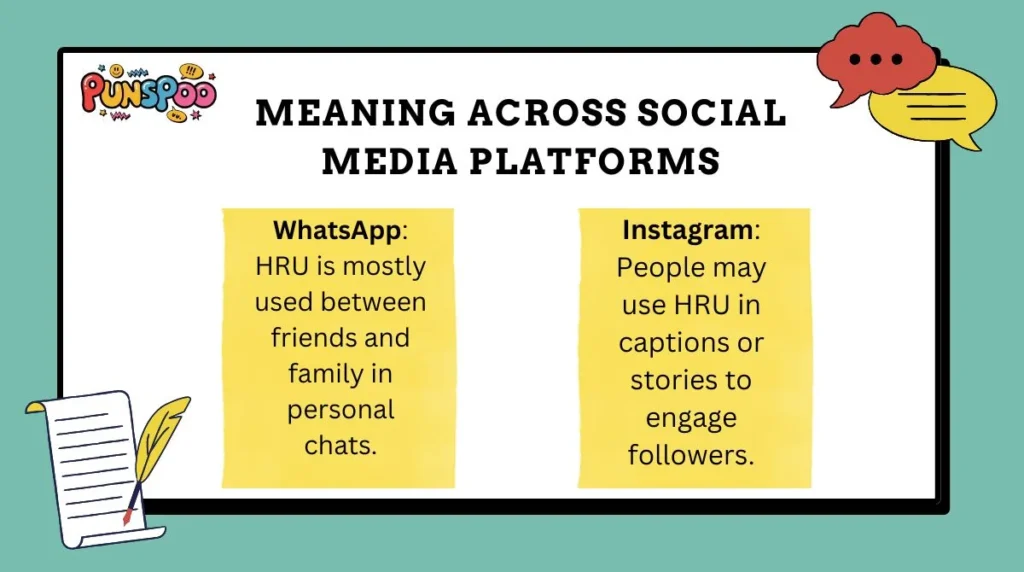
- WhatsApp: HRU is mostly used between friends and family in personal chats.
- Instagram: People may use HRU in captions or stories to engage followers.
- TikTok: Often in video comments or challenges to start interactions.
- Snapchat: Common in streaks or quick daily greetings.
The essence is the same across platforms—checking in casually with someone.
6️⃣ Technical, Scientific & Other Meanings
While HRU is primarily a social texting term, in rare technical contexts, it can mean:
- HRU in aviation: Hydraulic Reservoir Unit
- HRU in engineering: Heat Recovery Unit
- Medical/biology: Sometimes used as an abbreviation for “Human Response Unit”
However, in most online conversations, these meanings are rarely used. Context is key.
7️⃣ Common Misunderstandings & Wrong Usage ❌
- Mistaking HRU for “hur” or “her” in typing errors.
- Using HRU in formal emails, which may seem unprofessional.
- Thinking HRU is always flirtatious—it’s usually neutral unless context says otherwise.
8️⃣ Similar Words & Alternatives
| Abbreviation | Meaning | Usage Difference |
|---|---|---|
| HAY | How are you | Slightly more playful |
| HOWDY | Hello/How are you | Casual, friendly, informal |
| SUP | What’s up? | Very casual, often among teens |
| HAI/HAY | Hi + How | Friendly, sometimes for texting only |
| HAA | How are ya | Slang, informal, regional |
9️⃣ Difference Between HRU & Similar Terms
- HRU vs HAY: HRU is asking directly about well-being; HAY is more playful.
- HRU vs SUP: SUP is more about “What’s happening?” than emotional check-ins.
- HRU vs HOWDY: HOWDY is friendly but less common online.
Clear distinction helps avoid awkward conversations.
🔟 How to Use It in a Sentenc
💬 Friend: HRU?
💬 You: I’m good! Just watching a show, you?
💬 Crush: HRU today?
💬 You: Feeling great! How about you? 😊
💬 Group chat: HRU all?
💬 You: All good here! Anyone up for gaming?
💬 Co-worker (informal chat): HRU?
💬 You: Doing well! Wrapping up the project.
1️⃣1️⃣ How to Reply When Someone Uses This Word
- Simple: Good, you?
- Friendly: Doing great! How about yourself?
- Flirty: Better now that you asked 😏
- Casual group chat: All chill! What about everyone else?
1️⃣2️⃣ Meaning in Online Dating & Social Conversations ❤️
- HRU is a starter for small talk, often used to break the ice.
- Shows interest in the other person’s mood or day.
- Works especially for Gen Z and Millennials, who favor quick, friendly communication.
1️⃣3️⃣ Popularity & Trend Over Time 📈
- HRU has steadily increased in Google Trends from 2010–2026.
- Most searches come from teens and young adults aged 13–25.
- Continues to be popular due to its ease of use in texting apps and social media platforms.
1️⃣4️⃣ Why This Word Is Trending in 2026
- Short, efficient texting style aligns with current fast-paced digital communication.
- Popular in memes, reels, and story interactions.
- Used frequently in daily online conversations because it’s neutral, quick, and friendly.
1️⃣5️⃣ Pros & Cons of Using This Term
Pros:
- Quick and casual
- Shows friendliness and care
- Easy to type and widely understood
Cons:
- Too informal for professional settings
- Can confuse those unfamiliar with texting slang
- May appear lazy if overused in repeated messaging
FAQs
Q1: What does HRU mean in texting slang?
A1: HRU stands for “How are you?” used for casual check-ins.
Q2: Can HRU be used professionally?
A2: Rarely. Only in informal workplace chats with colleagues.
Q3: Is HRU considered flirty?
A3: Not always; context determines whether it’s friendly or flirty.
Q4: How do I reply to HRU?
A4: You can reply simply with Good, you? or a more expressive message depending on the chat.
Q5: Where did HRU originate?
A5: From early SMS and instant messaging culture, to save time while texting.
Conclusion
HRU is more than just an abbreviation—it’s a friendly, casual way to connect in the digital age.
Whether you’re texting friends, posting on social media, or engaging in light online dating, understanding HRU makes conversations smoother and more relatable.
Its simplicity, versatility, and ease of use have kept it trending into 2026, especially among younger audiences.
Knowing how and when to use HRU, along with proper responses, ensures you’re in tune with modern communication trends while keeping your chats friendly and approachable.

“I’m Maria James, weaving playful word-magic into every pun I craft at PunsPoo. I love turning language upside down and making you smile one clever twist at a time.”