In today’s fast-paced digital world, texting has its own language filled with abbreviations and acronyms. One of the most commonly seen yet sometimes confusing terms is “IDC”.
You may have come across it in messages from friends, social media comments, or even workplace chats.
But what does it actually mean? People search for IDC because it pops up everywhere, and understanding it can help you communicate better and avoid misunderstandings.
In this guide, we’ll break down IDC, explore its origins, real-life usage, and even its meaning across different platforms.
By the end, you’ll know exactly how and when to use IDC like a pro.
1️⃣ Meaning & Definition
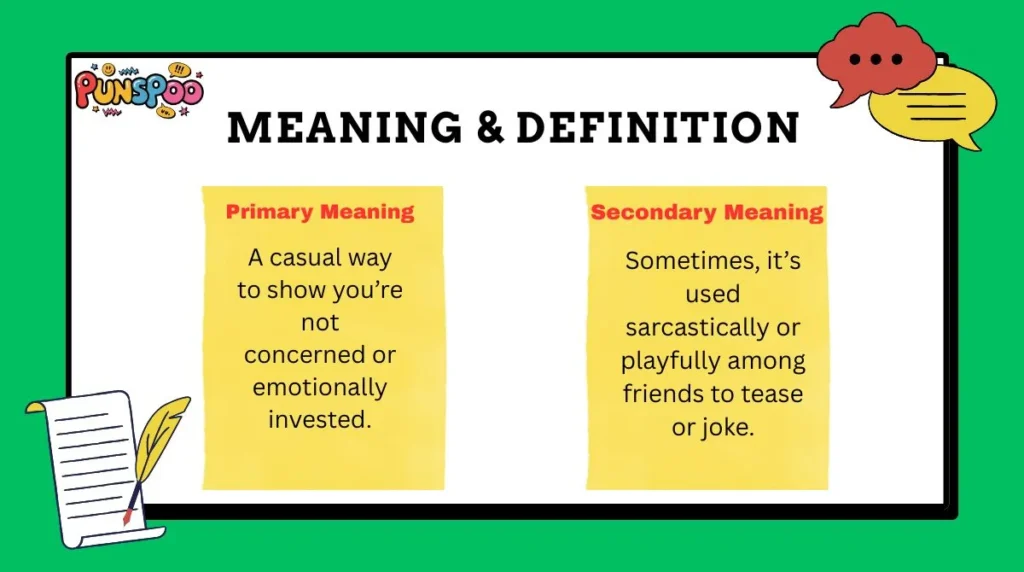
IDC stands for “I don’t care”. It’s a simple abbreviation used to express indifference or lack of interest in a topic, question, or situation.
- Primary meaning: A casual way to show you’re not concerned or emotionally invested.
- Secondary meaning: Sometimes, it’s used sarcastically or playfully among friends to tease or joke.
Example in daily life:
- Friend: “Do you want pizza or burgers?”
- You: “IDC 😅” (meaning you’re fine with either choice)
In short, IDC is a quick, shorthand way of saying, “It doesn’t matter to me.”
2️⃣ Origin & Background of the Term
IDC originated from early internet chatrooms and text messaging, where brevity was key. Short forms like this became popular with SMS texting in the 1990s. Over time, IDC moved from casual texting to social media and even email chats. The acronym fits perfectly into modern digital culture where typing fewer letters is faster and more convenient.
Interestingly, while IDC started as a purely functional abbreviation, it has evolved to carry emotional tones depending on context—sometimes playful, sometimes dismissive.
3️⃣ What Does It Really Mean in Daily Life?
IDC is more than just letters—it conveys attitude. In daily life, IDC can reflect:
- Casual indifference: “I’m okay with whatever you choose.”
- Mild frustration: “Fine, I don’t care anymore.”
- Playfulness: Teasing a friend without being harsh.
It’s all about tone. A simple IDC can come across differently depending on your relationship with the person and conversation style.
4️⃣ Usage in Different Contexts
Casual chatting:
- “IDC what movie we watch, you pick 🎬.”
Professional/workplace:
- Rarely used formally, but might appear in informal team chats:
- “IDC if we take lunch at 1 or 2, your call.”
Social media captions:
- “IDC about haters 😎 #LivingMyBestLife”
Text messages:
- “Are you coming tonight?”
- “IDC, up to you.”
IDC is versatile, but context and tone matter.
5️⃣ Meaning Across Social Media Platforms 📱
- WhatsApp: Casual chats with friends, often paired with emojis.
- Instagram: Used in captions or comments to show nonchalance.
- TikTok: Popular in captions or comment sections to express indifference humorously.
- Snapchat: Common in replies or stories; often paired with playful GIFs.
Each platform slightly changes the tone of IDC from casual to humorous or sarcastic.
6️⃣ Technical, Scientific & Other Meanings
While IDC usually means “I don’t care” in texting, it can have other meanings in professional or technical fields:
- Technology: IDC = Insulation-Displacement Connector (electronics)
- Medical: IDC = Invasive Ductal Carcinoma (breast cancer type)
- Finance: IDC = Industrial Development Corporation
- Aviation: IDC = Instrument Departure Clearance
Always consider context; texting IDC is usually not technical.
7️⃣ Common Misunderstandings & Wrong Usage ❌
- Misreading IDC as rudeness when it’s casual or playful.
- Using IDC in professional emails (can seem unprofessional).
- Confusing IDC with IDK (“I don’t know”), which has a completely different meaning.
Tip: Know your audience before using IDC to avoid confusion.
8️⃣ Similar Words & Alternatives
| Word | Meaning | Usage Difference | Example |
|---|---|---|---|
| IDK | I don’t know | Expresses lack of knowledge, not indifference | “IDK the answer to that quiz.” |
| Meh | Indifference | Informal, more casual than IDC | “Meh, it’s fine.” |
| Whatever | Flexibility/indifference | Slightly dismissive tone | “Whatever, you choose.” |
| Not bothered | Indifference | More polite than IDC | “I’m not bothered about the schedule.” |
| Doesn’t matter | Neutral | Formal/casual use | “It doesn’t matter which route we take.” |
9️⃣ Difference Between IDC & Similar Terms
- IDC vs IDK: IDC = I don’t care; IDK = I don’t know.
- IDC vs Meh: IDC can be blunt, while Meh is more casual and neutral.
- IDC vs Whatever: Whatever can seem dismissive; IDC is sometimes playful.
🔟 How to Use It in a Sentence
- Friend: “Do you want tea or coffee?”
You: “IDC ☕” - Friend: “Should we go out tonight?”
You: “IDC, your call 😎” - Sibling: “I lost your charger.”
You: “IDC, I have another one.” - Classmate: “Do we submit homework today?”
You: “IDC, I already finished mine.”
1️⃣1️⃣ How to Reply When Someone Uses This Word
- Casual: “Cool, whatever you like 👍”
- Playful: “Haha, classic IDC 😜”
- Romantic/Flirty: “IDC? Well, I do 😏”
1️⃣2️⃣ Meaning in Online Dating & Social Conversations ❤️
In dating apps or social chats, IDC can show casual interest or tease someone without being pushy. For example:
- “IDC where we eat, as long as I’m with you 😘”
It’s often used to keep conversations light and playful among Gen Z and Millennials.
1️⃣3️⃣ Popularity & Trend Over Time 📈
Google Trends shows IDC has grown steadily since 2010, especially among teenagers and young adults. Social media memes, TikTok videos, and texting culture fuel its popularity. It’s now a common digital shorthand that almost everyone understands.
1️⃣4️⃣ Why This Word Is Trending in 2026
- Rise of short, casual texting culture
- Popularity in memes, reels, and viral TikToks
- Younger generations prefer quick expressions of attitude over long sentences
IDC is trending because it’s efficient, expressive, and playful.
1️⃣5️⃣ Pros & Cons of Using This Term
Pros:
- Quick and efficient in texting
- Adds casual, playful tone
- Widely understood among young users
Cons:
- Can sound dismissive or rude
- Not suitable for formal communication
- Misunderstood by older generations
FAQs
Q1: Is IDC rude to use?
A: Not always—it depends on tone and relationship.
Q2: Can IDC be used professionally?
A: Rarely; it’s casual. Use alternatives like “It doesn’t matter.”
Q3: Is IDC the same as IDK?
A: No, IDC = I don’t care; IDK = I don’t know.
Q4: What emoji pairs well with IDC?
A: 😅, 😎, 😏, or 🙃 depending on tone.
Q5: Why do teens love using IDC?
A: It’s quick, expressive, and conveys attitude without long sentences.
Conclusion
IDC meaning in text is simple yet versatile. It conveys indifference, playfulness, or mild annoyance depending on context.
From casual chats with friends to social media captions, understanding IDC helps you communicate efficiently and avoid misunderstandings.
While it’s trending among younger generations and in digital culture, knowing when and how to use it is key.
Whether you’re texting, posting online, or chatting in dating apps, IDC is a shorthand that keeps conversations casual, expressive, and relatable.

“I’m Maria James, weaving playful word-magic into every pun I craft at PunsPoo. I love turning language upside down and making you smile one clever twist at a time.”