In the fast-paced world of texting and online chatting, sometimes a single letter can speak volumes. One of the most common yet confusing letters is “K”.
You might have received a message like “K” and wondered, “Is this rude? Short? Or just casual?” That’s exactly why millions search for the meaning of “K” in texts.
While it seems simple, its meaning can change depending on the context, the sender, or the platform.
In this guide, we’ll break down everything about “K meaning in text”, from its origins to its everyday usage, so you never misinterpret a message again.
1️⃣ Meaning & Definition
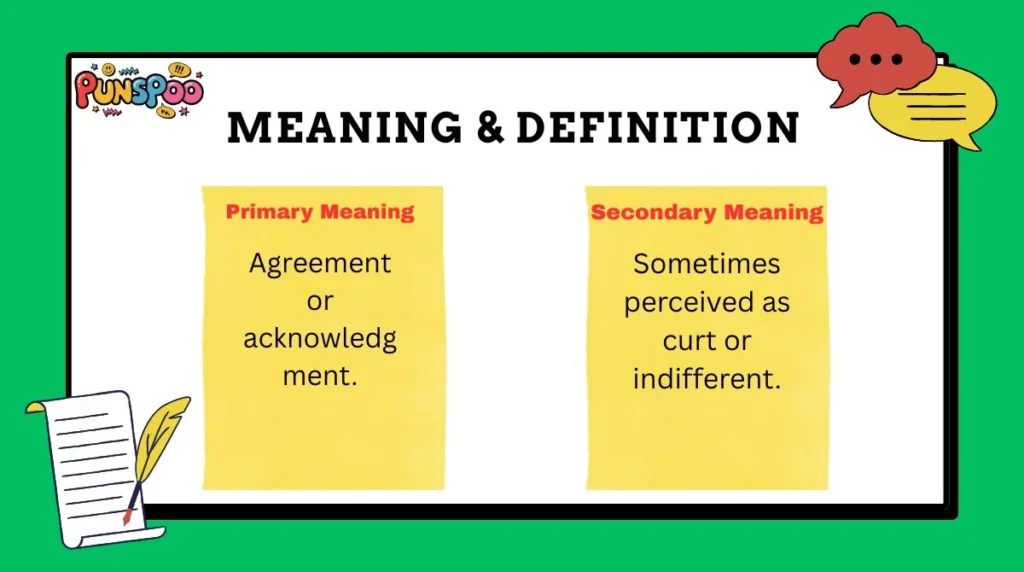
The letter “K” in texting is a shorthand for the word “okay”. It is commonly used to acknowledge a message or show agreement without writing the full word.
Primary Meaning:
- Agreement or acknowledgment.
- Quick response to show you’ve read or understood something.
Secondary Meanings:
- Sometimes perceived as curt or indifferent.
- Used sarcastically in casual conversations.
Real-Life Clarity:
- Friend: “I’ll meet you at 6 PM.”
- You: “K.”
Here, it simply means “okay, got it.”
2️⃣ Origin & Background of the Term
The use of “K” as shorthand for “okay” dates back decades. In text messaging and internet slang, people preferred brevity to save time and keystrokes. The term “okay” itself originated in the early 19th century in America, often abbreviated as “O.K.”, “ok”, or eventually “k” in digital communication.
Slang Roots:
- Early texting (SMS) and instant messaging in the 1990s encouraged single-letter responses.
- The simplicity of “K” made it an easy way to acknowledge a message quickly.
3️⃣ What Does It Really Mean in Daily Life?
While “K” literally means “okay,” it can carry emotional nuances depending on tone:
- Friendly: A quick nod to confirm plans.
- Neutral: No strong feeling, just acknowledgment.
- Annoyed or passive-aggressive: Sometimes used when someone is upset but doesn’t want to argue.
In essence, context and relationship matter. The same “K” from a friend might be casual, while from a partner during an argument, it can feel dismissive.
4️⃣ Usage in Different Contexts
Casual Chatting:
- “I’m late, sorry.” → “K 😅” (friendly, forgiving)
Professional / Workplace:
- “Please send the report by EOD.” → “K, will do.” (efficient, professional)
Social Media Captions:
- “Finally Friday! K…” (can hint at excitement or sarcasm)
Text Messages:
- “Can you pick up groceries?” → “K.” (quick acknowledgment)
5️⃣ Meaning Across Social Media Platforms 📱
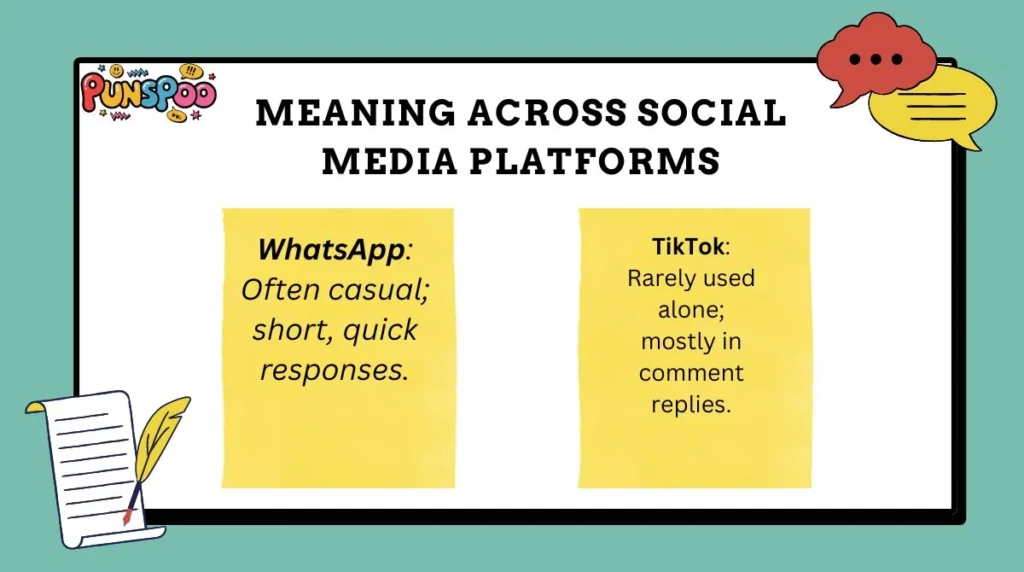
- WhatsApp: Often casual; short, quick responses.
- Instagram: Can appear indifferent in DMs.
- TikTok: Rarely used alone; mostly in comment replies.
- Snapchat: Usually neutral, sometimes playful depending on the emoji used.
6️⃣ Technical, Scientific & Other Meanings
Besides texting, “K” appears in other fields:
- Physics: Kelvin, the unit of temperature.
- Chemistry: Potassium, represented as “K.”
- Finance: Thousand (e.g., 5K = 5,000).
- Technology: Often used as a variable or shorthand in coding.
7️⃣ Common Misunderstandings & Wrong Usage ❌
- Interpreting “K” as rude when it’s neutral.
- Using it in formal emails (unprofessional).
- Confusing “K” with “KK,” which can feel more cheerful or sarcastic.
8️⃣ Similar Words & Alternatives
| Word | Meaning | Usage Difference |
|---|---|---|
| OK / Okay | General agreement | Slightly longer, neutral |
| KK | Friendly agreement | More casual, cheerful |
| Yep / Yup | Informal agreement | Casual, playful |
| Sure | Acceptance / agreement | Polite, versatile |
| Alright | Confirmation | Neutral or approving |
9️⃣ Difference Between K & Similar Terms
- K vs OK: “OK” is formal; “K” is casual.
- K vs KK: “KK” feels friendlier and less blunt.
- K vs Yep: “Yep” implies more engagement; “K” can be indifferent.
🔟 How to Use It in a Sentence
💬 Example 1: Friend: “Movie tonight?” You: “K 🎬”
💬 Example 2: Colleague: “Meeting at 10 AM.” You: “K, noted.”
💬 Example 3: Partner: “I need some space.” You: “K.” (may seem distant)
💬 Example 4: Sibling: “Can I borrow your charger?” You: “K 👍”
1️⃣1️⃣ How to Reply When Someone Uses This Word
- Use emojis to soften “K.”
- Match tone: If they are casual, reply casually.
- Avoid overthinking: Often just acknowledgment.
1️⃣2️⃣ Meaning in Online Dating & Social Conversations ❤️
In dating chats, “K” can indicate:
- Neutral acceptance: “Got it.”
- Low enthusiasm: Could hint at disinterest.
- Playfulness: Sometimes paired with emojis to lighten tone.
1️⃣3️⃣ Popularity & Trend Over Time 📈
- Usage has grown since early SMS days.
- Google Trends shows spikes in 2010–2015, and steady use on social media.
- Millennials and Gen Z still use it frequently, but context matters more than ever.
1️⃣4️⃣ Why This Word Is Trending in 2026
- Minimalist texting culture.
- Meme culture and short-form content make “K” a relatable, quick reaction.
- Emojis + “K” create expressive shorthand for modern conversations.
1️⃣5️⃣ Pros & Cons of Using This Term
Pros:
- Quick acknowledgment.
- Saves typing effort.
- Fits casual digital conversations.
Cons:
- Can seem curt or rude.
- Not suitable for professional communication.
- Misinterpretation possible without context.
FAQs
Q1: Is “K” rude?
A1: Not always; it depends on tone and context.
Q2: What’s the difference between “K” and “KK”?
A2: “KK” is more casual, cheerful, and friendly.
Q3: Can “K” be used professionally?
A3: Use cautiously; better to type “OK” or “Noted.”
Q4: Why do people use “K” instead of “OK”?
A4: For brevity and quick acknowledgment.
Q5: Does “K” have other meanings outside texting?
A5: Yes, in science, finance, and technology, “K” can mean potassium, Kelvin, or thousand.
Conclusion
The humble “K” may be just a single letter, but it carries a lot of meaning in digital communication.
From casual chats with friends to social media captions, understanding its nuance can prevent miscommunication.
Its popularity continues to grow because it’s simple, fast, and versatile.
Whether you use it to show agreement, acknowledgment, or even playful sarcasm, “K” remains one of the most iconic shorthand expressions of the texting era.
So next time you see a “K,” you’ll know exactly what it means—and how to respond with confidence.

“I’m Maria James, weaving playful word-magic into every pun I craft at PunsPoo. I love turning language upside down and making you smile one clever twist at a time.”