If you’ve ever been texting with friends or scrolling through social media, you might have stumbled across the term “STFU.”
But what does it actually mean? In today’s digital world, abbreviations and slang dominate online chats, and understanding them helps you communicate clearly without awkward moments.
People search for the meaning of STFU to decode casual messages, memes, or social posts, especially since the term can seem rude or funny depending on the context.
This article will guide you through its meaning, origins, usage across platforms, and even how to respond when someone uses it, all in an easy, friendly, and engaging way.
1️⃣ Meaning & Definition
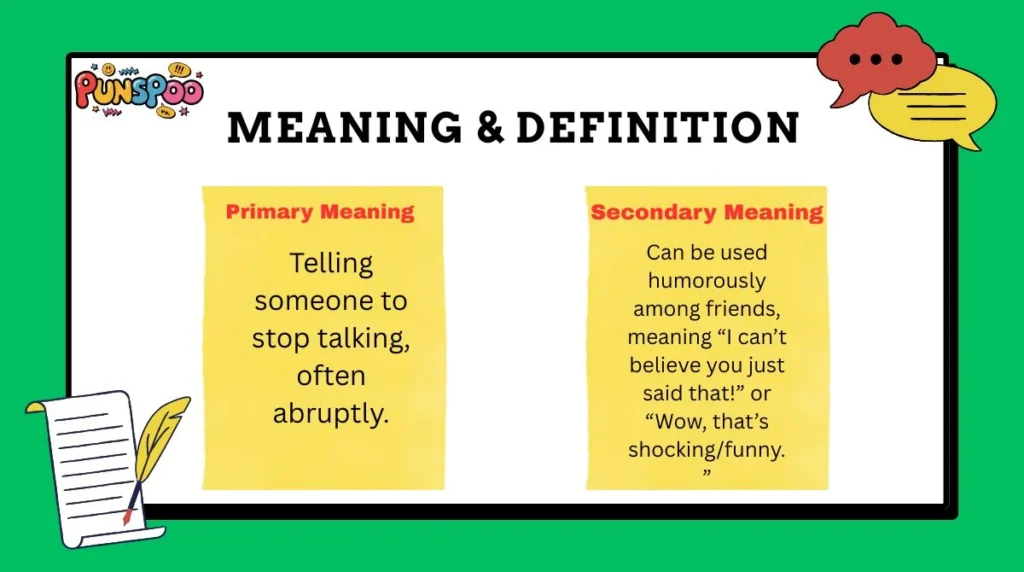
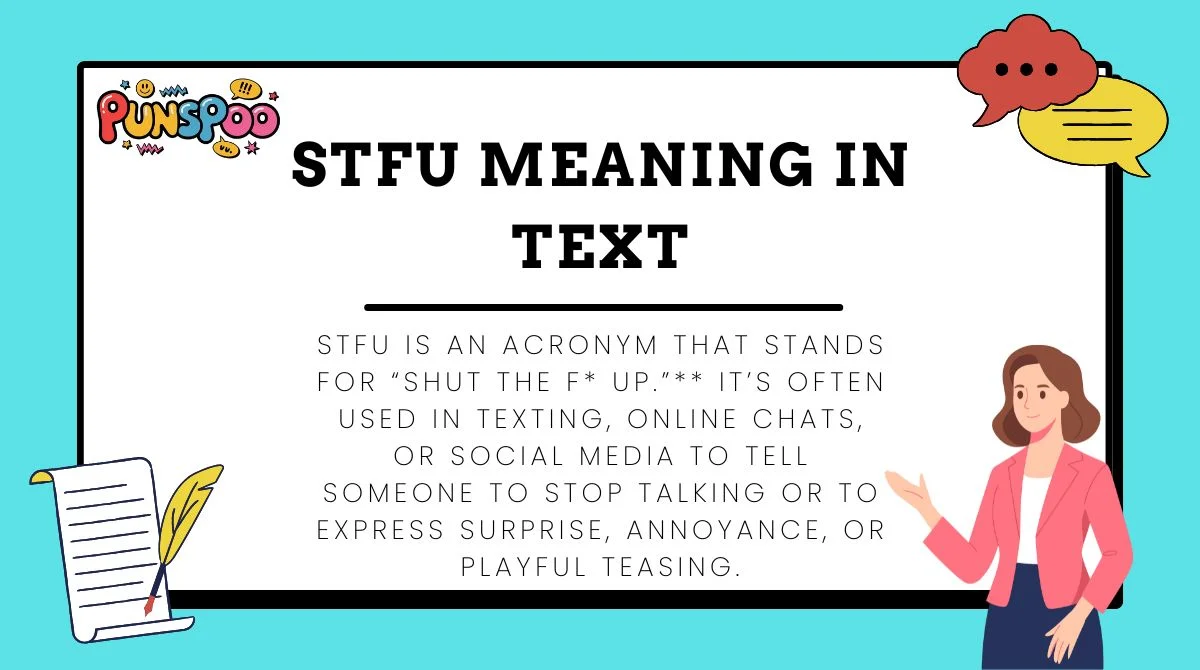
STFU is an acronym that stands for “Shut The F* Up.”** It’s often used in texting, online chats, or social media to tell someone to stop talking or to express surprise, annoyance, or playful teasing.
- Primary meaning: Telling someone to stop talking, often abruptly.
- Secondary meaning: Can be used humorously among friends, meaning “I can’t believe you just said that!” or “Wow, that’s shocking/funny.”
💡 Example in daily life:
- Friend: “I ate the entire pizza myself!”
- You: “STFU 😲” (playfully expressing surprise)
2️⃣ Origin & Background of the Term
The acronym STFU originated from internet chat culture in the early 2000s, when fast typing became a priority in chat rooms, forums, and instant messaging platforms like MSN Messenger and AIM. It’s a blend of casual slang and modern shorthand, designed to convey strong emotion in a few letters. Over time, it spread to social media, texting, and even gaming communities, becoming part of everyday online language.
3️⃣ What Does It Really Mean in Daily Life?
While it literally translates to “be quiet,” the emotional context varies:
- Annoyance or frustration: “STFU, I can’t deal with this right now.”
- Humorous or playful: Among close friends, it can express shock or teasing.
- Expressing disbelief: “STFU, you did what?!”
The key is tone and relationship—STFU can feel harsh if used with strangers but funny among friends.
4️⃣ Usage in Different Contexts
Casual chatting:
- “STFU, that story is hilarious 😂”
Professional/workplace: (less common, usually avoided)
- “Let’s focus, please. STFU is not suitable here.”
Social media captions:
- “Me watching my dog eat my homework: STFU 😂 #relatable”
Text messages:
- “STFU! You really bought 10 pairs of shoes?”
5️⃣ Meaning Across Social Media Platforms 📱
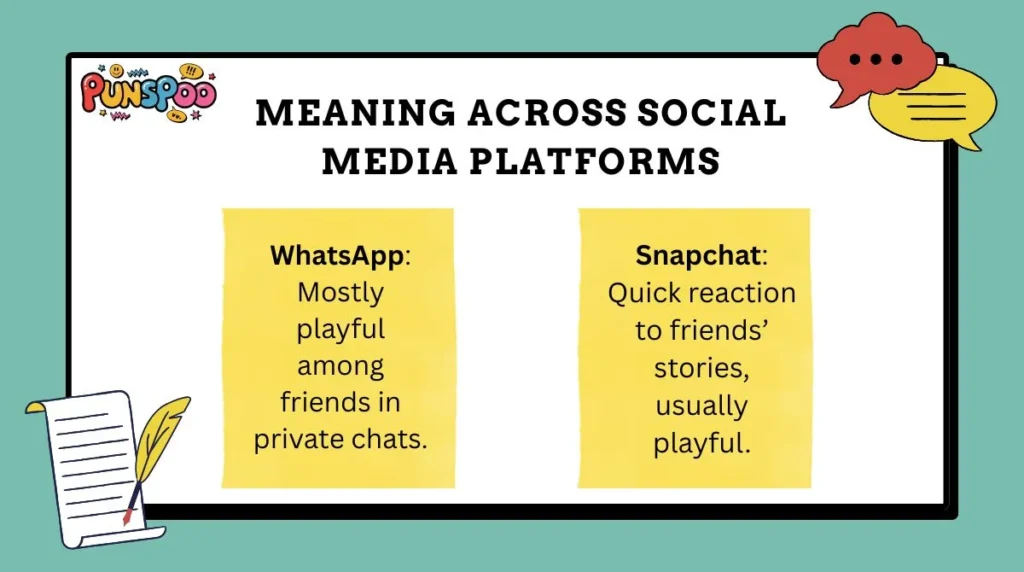
Different platforms give STFU slightly different vibes:
- WhatsApp: Mostly playful among friends in private chats.
- Instagram: Often used in comment sections to react humorously.
- TikTok: Common in captions or memes expressing surprise or sarcasm.
- Snapchat: Quick reaction to friends’ stories, usually playful.
6️⃣ Technical, Scientific & Other Meanings
While STFU is primarily slang, in rare cases it may appear in technical contexts with different meanings. Examples include:
- Science or aviation acronyms: Can occasionally represent unrelated technical terms in manuals, but this is uncommon.
- Medical/engineering: Not standard; using STFU here is generally inappropriate.
7️⃣ Common Misunderstandings & Wrong Usage ❌
- Mistaking STFU as a polite suggestion rather than rude slang.
- Using STFU with elders or in professional settings, which may be offensive.
- Assuming it’s only negative—it can also be playful or humorous.
8️⃣ Similar Words & Alternatives
| Term | Meaning | Usage Difference |
|---|---|---|
| Shut up | Literal: stop talking | Polite version, less aggressive |
| Hush | Quiet down | Gentle, playful tone |
| Zip it | Stop talking | Informal, slightly rude |
| SMH | Shaking my head | Expresses disbelief, not direct telling to stop |
9️⃣ Difference Between STFU & Similar Terms
STFU vs Shut up: STFU is more aggressive and slangy, while “shut up” can be said casually.
STFU vs Hush: “Hush” is gentle and playful, suitable for kids or humor.
STFU vs SMH: SMH expresses disbelief; STFU commands silence or reacts sharply.
🔟 How to Use It in a Sentence
💬 Example 1: “STFU! You actually met Ariana Grande? 😱”
💬 Example 2: “STFU 😂 that joke was too good.”
💬 Example 3: “Bro, STFU. I’m trying to study!”
💬 Example 4: “STFU, stop embarrassing yourself in front of everyone 😅”
1️⃣1️⃣ How to Reply When Someone Uses This Word
- Playful response: “Haha, ok ok 😅”
- Flirty response: “Only if you STFU first 😏”
- Annoyed response: “Fine, I’ll be quiet 🙄”
1️⃣2️⃣ Meaning in Online Dating & Social Conversations ❤️
Among Gen Z and Millennials:
- Playful teasing: “STFU, you’re so cute 😍”
- Reacting to surprises: “STFU, that’s amazing! 😱”
It’s casual, cheeky, and reflects modern texting culture.
1️⃣3️⃣ Popularity & Trend Over Time 📈
- STFU has steadily grown in usage since 2000, especially on Twitter, TikTok, and Discord.
- Google Trends shows spikes during viral memes or celebrity gossip.
1️⃣4️⃣ Why This Word Is Trending in 2026
- Memes and reels continue to spread it.
- Short, emotional, and punchy words dominate modern texting.
- Its mix of humor, rudeness, and surprise makes it versatile.
1️⃣5️⃣ Pros & Cons of Using This Term
Pros:
- Quick and expressive
- Funny among friends
- Recognizable online
Cons:
- Can be offensive if misused
- Not suitable in professional or formal settings
- Overuse may seem aggressive
FAQs
Q1: Is STFU rude?
- Yes, if used seriously; playful usage is fine among friends.
Q2: Can I use STFU in texts to my crush?
- Only if your relationship is casual and playful.
Q3: What is a polite alternative to STFU?
- “Please be quiet” or “Hush.”
Q4: Is STFU used in professional emails?
- No, it’s informal slang; avoid in professional communication.
Q5: Does STFU appear in memes?
- Frequently! Especially on TikTok, Instagram, and Twitter.
Conclusion
STFU is a modern, slangy acronym that packs emotion, humor, and sometimes rudeness into a few letters.
Whether you’re texting friends, reacting to a shocking meme, or joining social media conversations, understanding its meaning and context is key to using it effectively.
While playful among peers, it’s important to consider your audience to avoid misunderstandings. In 2026, STFU remains popular because it’s short, punchy, and perfectly fits the digital era’s casual communication style.
Use it wisely, and it can add humor and emphasis to your chats without crossing lines.

“I’m Maria James, weaving playful word-magic into every pun I craft at PunsPoo. I love turning language upside down and making you smile one clever twist at a time.”