If you’ve ever been texting or scrolling through social media, you might have seen the term “STFU” pop up. But what does it actually mean?
Many people encounter it online and wonder whether it’s rude, funny, or just slang.
Essentially, STFU is shorthand used in texting and online messaging to quickly tell someone to “be quiet.” While it’s often blunt, it’s widely used among teens, Gen Z, and millennials to add humor, frustration, or emphasis in conversations.
People search for it not only to decode messages but also to understand its context, proper usage, and the emotions behind it.
In this guide, we’ll break down everything you need to know about STFU meaning in text—from its origin to modern trends.
1️⃣ Meaning & Definition
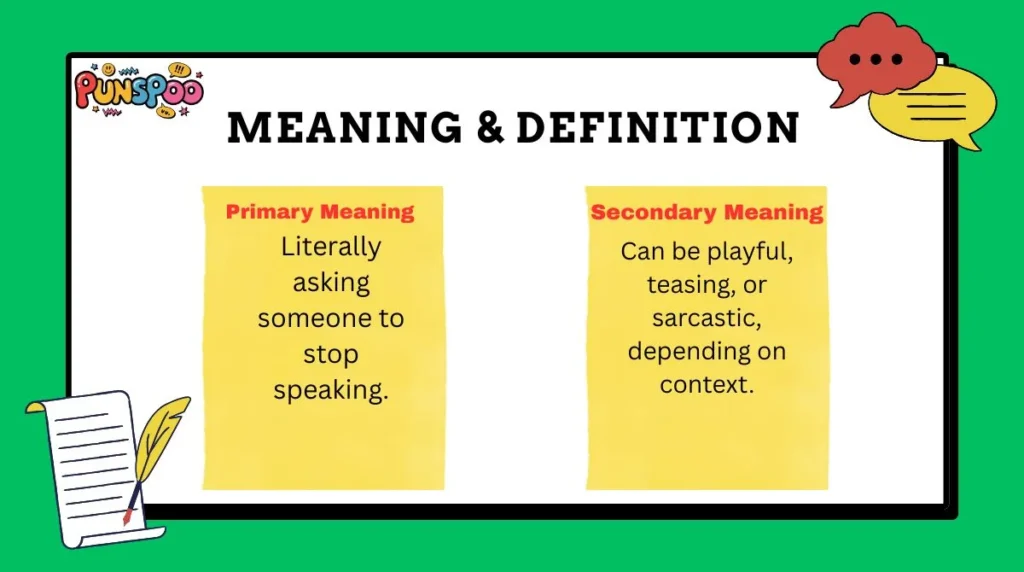
STFU stands for “Shut The F* Up.”** It’s a direct, informal way of telling someone to stop talking.
- Primary Meaning: Literally asking someone to stop speaking.
- Secondary Meaning: Can be playful, teasing, or sarcastic, depending on context.
Real-life clarity:
- Friend jokingly: “STFU 😂, no way that happened!”
- Serious tone: “STFU, this isn’t the time for jokes.”
In short, it’s mostly used in digital conversations to express strong emotions—frustration, surprise, or humor—without needing a long explanation.
2️⃣ Origin & Background of the Term
STFU originated from internet slang in the early 2000s, when forums, chat rooms, and early social media platforms needed quick, short expressions.
- Roots: “Shut up” → “STU” → added emphasis with the F-word → STFU.
- It became common on platforms like Xanga, MySpace, and early Reddit before spreading to texting and Instagram/TikTok.
The term’s appeal is its brevity and strong emotional impact—it’s faster and punchier than typing the full phrase. Over time, it transitioned from anger-driven conversations to casual, playful internet lingo.
3️⃣ What Does It Really Mean in Daily Life?
In everyday usage, STFU isn’t always rude. Its meaning changes depending on tone, context, and relationship between people:
- Joking among friends: playful teasing, exaggerated reactions.
- Argumentative context: can signal irritation or anger.
- Surprise or shock: reacting to unbelievable statements.
Example:
- Friend sends a mistaken story: “STFU, seriously?! 😲” → expressing surprise, not anger.
It’s a quick emotional shorthand, allowing people to react instantly without long explanations.
4️⃣ Usage in Different Contexts
Casual Chatting:
- “STFU 😂 you did not just eat all the pizza!”
Professional/Workplace:
- Rarely appropriate; might be replaced with “Please be quiet” or “Let’s pause for now.”
Social Media Captions:
- Meme captions: “When your sibling eats your snack… STFU!”
Text Messages:
- Friend teasing: “STFU, I knew you were lying! 😏”
The key is tone—STFU can be funny, sarcastic, or harsh depending on context.
5️⃣ Meaning Across Social Media Platforms 📱
- WhatsApp: Quick reactions in group chats.
- Instagram: Commenting on shocking posts or memes.
- TikTok: Reactions in duets or captions.
- Snapchat: Snaps with playful or exaggerated messages.
Different platforms affect how harsh or funny STFU feels; emojis often soften the tone.
6️⃣ Technical, Scientific & Other Meanings
While STFU is mainly slang, it rarely appears in technical fields:
- No common usage in physics, medical, or aviation.
- Sometimes jokingly used in coding forums to mean “Stop The Functioning Unnecessarily” or similar playful acronyms.
In essence, outside texting and social media, STFU is almost always understood in its original informal sense.
7️⃣ Common Misunderstandings & Wrong Usage ❌
- Mistaking STFU as friendly → can offend if tone is serious.
- Using it in professional emails → inappropriate.
- Assuming it’s always angry → can be playful in casual chats.
Understanding context is crucial. Misuse often leads to social friction or embarrassment.
8️⃣ Similar Words & Alternatives
| Word/Abbreviation | Meaning | Usage Difference |
|---|---|---|
| STFU | Shut The F*** Up | Strong, blunt, informal |
| Shut up | Stop talking | Less aggressive, common speech |
| Hush | Be quiet | Gentle, soft tone |
| Zip it | Stop talking | Playful or slightly rude |
| Quiet | Calm down / stop speaking | Neutral, polite |
9️⃣ Difference Between STFU & Similar Terms
- STFU vs Shut up: STFU is stronger, more emphatic.
- STFU vs Hush: Hush is gentle; STFU is bold.
- STFU vs Zip it: Zip it is humorous or teasing; STFU is straightforward.
This clarity helps avoid miscommunication, especially with younger audiences or online chats.
🔟 How to Use It in a Sentence
💬 “STFU 😂 I can’t believe you did that!”
💬 “Dude, STFU, this is serious.”
💬 “STFU, you’re lying again 😏”
💬 “I know, right? STFU, I’m shocked too!”
1️⃣1️⃣ How to Reply When Someone Uses This Word
- Playful: “😂 Okay, okay, I’m quiet!”
- Surprised: “Whoa, didn’t mean to shock you!”
- Angry: Ignore or calmly respond to de-escalate.
Tone matters more than words.
1️⃣2️⃣ Meaning in Online Dating & Social Conversations ❤️
- Used for fun teasing or playful banter.
- Often expresses surprise or disbelief in dating chats:
- “STFU 😳, you’ve never watched that movie?!”
Among Gen Z, it’s both humorous and emotional shorthand, making chats snappier.
1️⃣3️⃣ Popularity & Trend Over Time 📈
- Early 2000s: Forums, IM chats.
- 2010–2015: Became widespread on Reddit, Tumblr.
- 2020–2026: Trending on TikTok, Instagram memes, texting.
Its growth correlates with short-form, casual digital communication.
1️⃣4️⃣ Why This Word Is Trending in 2026
- Memes and reels: Punchy reactions need concise words.
- Short attention span: People love quick emotional responses.
- Playful banter: Fits Gen Z humor perfectly.
STFU is now a cultural shorthand that conveys emotion instantly.
1️⃣5️⃣ Pros & Cons of Using This Term
Pros:
- Quick, expressive, and emotional.
- Adds humor or emphasis.
Cons:
- Can offend if misused.
- Not suitable for professional or sensitive conversations.
Use it wisely for maximum effect with minimum offense.
FAQs
Q1: Is STFU rude?
- Depends on tone; can be playful or harsh.
Q2: Can I use STFU at work?
- No, it’s informal and inappropriate in professional settings.
Q3: What’s a polite alternative?
- “Please be quiet” or “Hold on a moment.”
Q4: Can STFU be used in memes?
- Yes, it’s widely used for humorous exaggeration.
Q5: Do all social media users understand STFU?
- Mostly teens and young adults; some older users may not recognize it.
Conclusion
STFU meaning in text has evolved from simple slang to a cultural shorthand for expressing emotions quickly.
While it literally means “Shut The F*** Up,” its tone can range from playful teasing to serious irritation depending on context.
With roots in early internet slang, it’s now a popular term across social media, messaging apps, and casual conversations.
Understanding the subtleties—when it’s funny, when it’s harsh, and when it’s inappropriate—is essential for communicating effectively online.
Whether you’re reacting to a meme, chatting with friends, or sending texts, knowing how and when to use STFU will help you navigate digital conversations confidently.
Remember, it’s not just what you say, but how you say it that counts in the world of texting and social media.

“I’m Maria James, weaving playful word-magic into every pun I craft at PunsPoo. I love turning language upside down and making you smile one clever twist at a time.”