If you’ve ever received a short reply like “STSU” in a text or chat and felt confused, you’re not alone.
Acronyms like STSU are becoming more common as people look for faster, more casual ways to communicate online.
Many users search for “stsu meaning in text” because the term isn’t as widely known as classics like LOL or BRB, yet it pops up frequently in modern conversations—especially among Gen Z and millennials.
STSU is usually used in informal chats to express sympathy or acknowledgment in a quick way. However, its meaning can slightly change depending on context, tone, and platform.
In this guide, we’ll break down what STSU means, where it came from, how people actually use it in daily life, and how you should respond when someone sends it to you.
1️⃣ Meaning & Definition of STSU
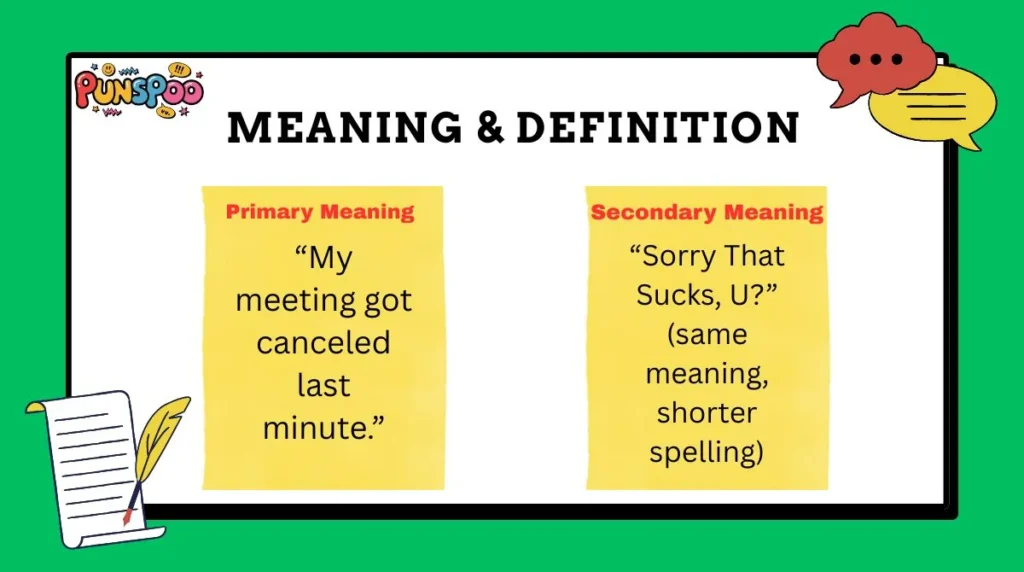
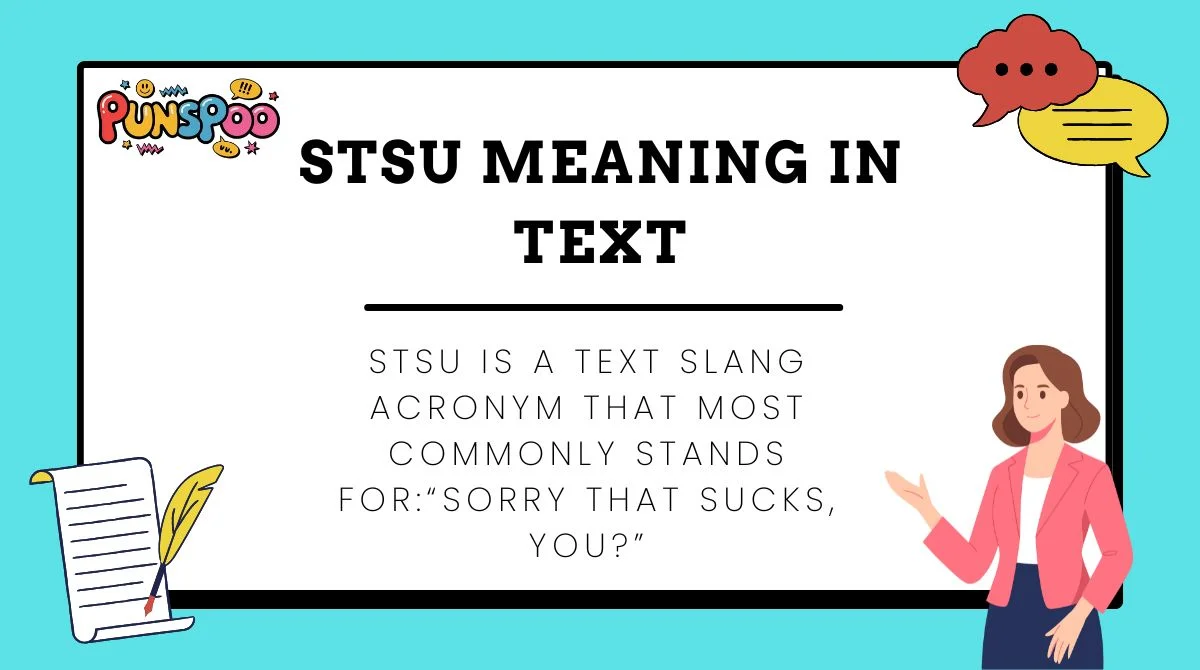
STSU is a text slang acronym that most commonly stands for:
“Sorry That Sucks, You?”
Primary Meaning
In everyday texting, STSU is a quick way to show sympathy when someone shares bad news, followed by casually turning the conversation back to the other person.
Example:
- “My meeting got canceled last minute.”
- “STSU. How are you doing now?”
Secondary Meaning
In rare cases, STSU can also be interpreted as:
- “Sorry That Sucks, U?” (same meaning, shorter spelling)
The tone is usually casual, friendly, and empathetic, not formal or emotional-heavy. It’s a “quick check-in” response rather than a deep emotional reply.
2️⃣ Origin & Background of the Term
STSU comes from internet slang culture, where users shorten full sentences into compact acronyms.
- Sorry That Sucks was already a common phrase in online forums and chats.
- Over time, it was shortened to STS, and then expanded to STSU by adding “you?” to keep the conversation flowing.
This type of acronym became popular with:
- Early instant messaging (MSN, AOL chats)
- SMS texting with character limits
- Modern platforms like Snapchat and WhatsApp
STSU has no formal dictionary origin. It’s purely conversational and community-driven.
3️⃣ What Does STSU Really Mean in Daily Life?
In real life, STSU works like a verbal nod. It doesn’t dive deep, but it shows:
- You heard the other person
- You acknowledge their frustration
- You want to keep chatting
Emotionally, STSU communicates:
- Mild empathy 🤝
- Casual concern
- Friendly engagement
It’s often used when:
- The problem is annoying but not serious
- The conversation is light
- The sender doesn’t want to sound overly dramatic
4️⃣ Usage in Different Contexts
Casual Chatting
- “My phone battery died again.”
→ “STSU 😅”
Professional / Workplace
- “Client moved the deadline earlier.”
→ “STSU—let me know if you need help.”
Social Media Captions
- “Missed my flight today.”
→ Comments: “STSU 😭”
Text Messages
- “Got stuck in traffic for two hours.”
→ “STSU. Want to vent?”
5️⃣ Meaning Across Social Media Platforms 📱
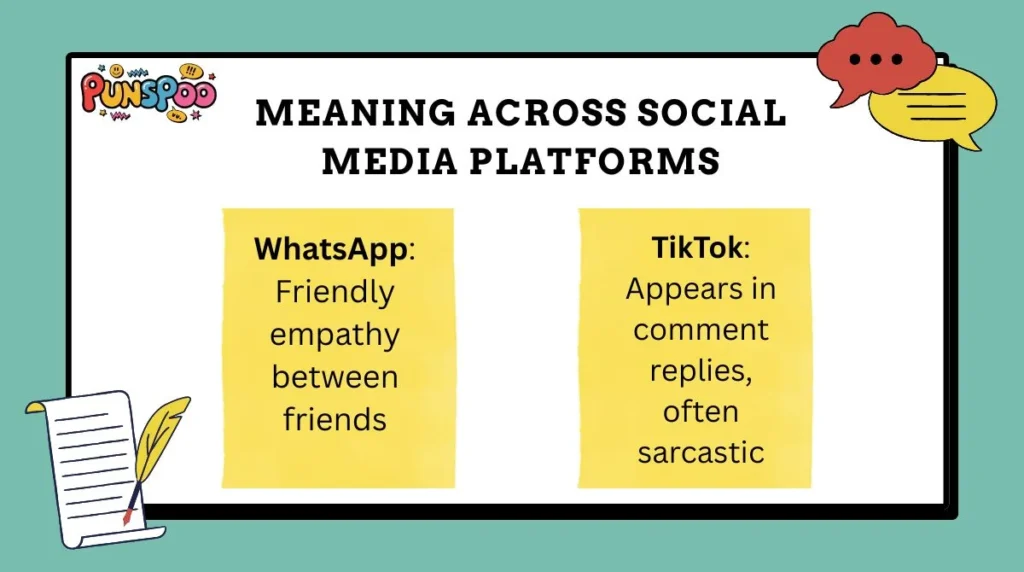
- WhatsApp: Friendly empathy between friends
- Instagram: Used in comments or DMs for quick reactions
- TikTok: Appears in comment replies, often sarcastic
- Snapchat: Casual acknowledgment, sometimes playful
The meaning stays similar, but tone changes with emojis or context.
6️⃣ Technical, Scientific & Other Meanings
Outside texting, STSU has no widely accepted technical or scientific meaning.
Occasionally, it may appear as:
- A random abbreviation in usernames
- An internal acronym in small organizations
But these are not standard or globally recognized meanings.
7️⃣ Common Misunderstandings & Wrong Usage ❌
Many people misunderstand STSU as:
- A rude phrase ❌
- A sarcastic insult ❌
- A command ❌
Reality:
STSU is not offensive by default. Tone matters. Without emojis or context, it may feel dry—but it’s usually meant kindly.
8️⃣ Similar Words & Alternatives
| Term | Meaning | Tone | Usage Difference |
|---|---|---|---|
| That sucks | Expresses sympathy | Casual | No question back |
| Sorry to hear that | Polite empathy | Semi-formal | More serious |
| Oof | Reaction | Playful | No empathy |
| SMH | Disapproval | Negative | Judgmental |
| I feel you | Emotional support | Warm | Deeper connection |
9️⃣ Difference Between STSU & Similar Terms
- STSU vs “Sorry to hear that”
→ STSU is casual; the other is formal - STSU vs “That sucks”
→ STSU keeps the conversation going - STSU vs “Oof”
→ STSU shows empathy; oof is just reaction
🔟 How to Use It in a Sentence
💬 “My laptop crashed again.”
💬 “STSU 😬 want help fixing it?”
💬 “Didn’t get the job.”
💬 “STSU. You’ll get something better 💙”
💬 “Missed my bus.”
💬 “STSU lol”
1️⃣1️⃣ How to Reply When Someone Uses STSU
- “Yeah, it was annoying 😅”
- “True, but I’m okay now”
- “Haha yeah, what about you?”
- “Appreciate it!”
1️⃣2️⃣ Meaning in Online Dating & Social Chats ❤️
In dating chats, STSU shows:
- Casual care
- Emotional awareness without pressure
- Friendly interest
It’s safe, non-clingy, and socially smooth.
1️⃣3️⃣ Popularity & Trend Over Time 📈
STSU usage has grown steadily with:
- Short-form texting
- Meme culture
- Fast-paced conversations
It’s still niche but recognizable.
1️⃣4️⃣ Why This Word Is Trending in 2026
- Faster conversations
- Emoji-friendly tone
- Gen Z slang adoption
- Low-effort empathy culture
1️⃣5️⃣ Pros & Cons of Using STSU
✅ Pros
- Quick empathy
- Friendly tone
- Keeps chats flowing
❌ Cons
- Too casual for serious situations
- Can sound dry without emojis
- Not suitable for formal writing
FAQs
Q1: Is STSU rude?
No, it’s usually empathetic.
Q2: Can STSU be sarcastic?
Yes, depending on tone and context.
Q3: Is STSU safe for work chats?
Only in informal teams.
Q4: Does STSU mean different things?
Mostly the same, but tone varies.
Q5: Is STSU Gen Z slang?
Yes, mostly used by younger users.
Conclusion
STSU may look confusing at first, but once you understand it, it’s a simple and friendly way to respond in modern digital conversations.
The stsu meaning in text centers around casual empathy—acknowledging someone’s frustration while keeping the chat moving.
It’s not formal, not rude, and not deep; it sits comfortably in everyday texting culture. Like all slang, its impact depends on context, tone, and timing.
Use it with friends, in relaxed chats, or on social media, but avoid it in serious or professional settings. Now that you know what STSU really means, you can read, reply, and use it with confidence.

“I’m Maria James, weaving playful word-magic into every pun I craft at PunsPoo. I love turning language upside down and making you smile one clever twist at a time.”