In today’s fast-paced digital world, people often come across phrases like “text to text” while chatting, texting, or browsing social media.
But what does it really mean? Many search for this term to understand its real-life usage, origin, and nuances in communication.
Essentially, it refers to a method of sending, comparing, or interpreting messages between texts.
From casual texting to professional exchanges, its usage has evolved, and its meaning can slightly differ depending on context.
This article will break down text to text meaning in simple, relatable terms, explore its history, everyday relevance, and provide clear examples so that anyone can use it correctly and confidently.
1️⃣ Meaning & Definition
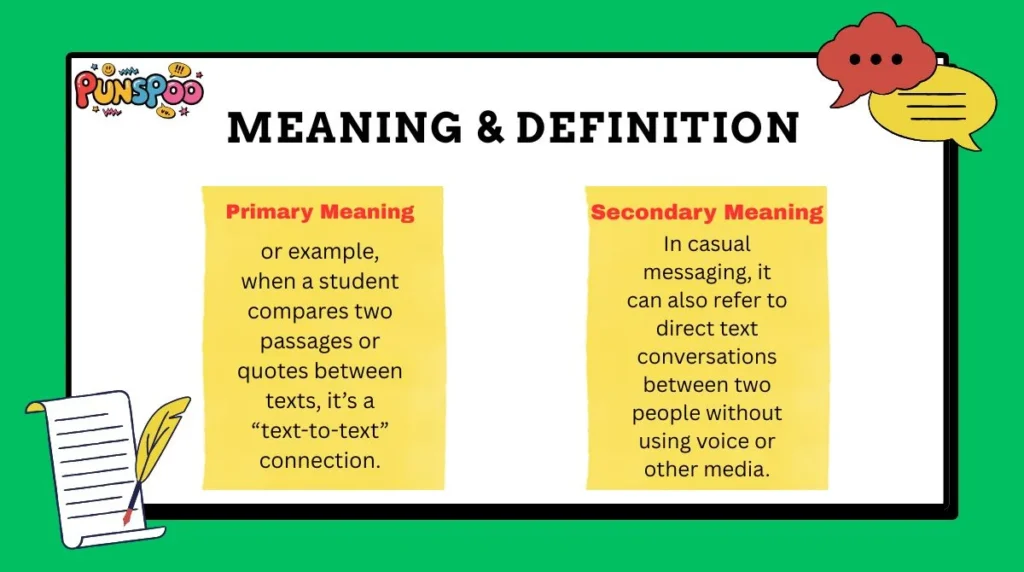
Text to text is a phrase commonly used in communication, technology, and education.
- Primary Meaning: Sending or linking information directly from one text to another. For example, when a student compares two passages or quotes between texts, it’s a “text-to-text” connection.
- Secondary Meaning: In casual messaging, it can also refer to direct text conversations between two people without using voice or other media.
Simple Explanation: It’s basically about relating, connecting, or exchanging content via text—whether it’s academic, professional, or personal.
Example in Daily Life:
- Comparing a story from one book to another → text to text connection
- Messaging a friend about today’s plans → text to text conversation
2️⃣ Origin & Background of the Term
The term “text to text” originates from educational and technological contexts:
- Education: Teachers often ask students to make a “text-to-text” connection, meaning relate one reading material to another.
- Technology: Messaging apps and SMS platforms started using it informally to describe direct text-based interactions.
- Slang: In modern digital communication, it has become shorthand for any text-based conversation, especially among Gen Z.
Fun Fact: Its rise coincided with the popularity of messaging apps in the early 2000s, but its academic roots go back further.
3️⃣ What Does It Really Mean in Daily Life?
In everyday usage, text to text often just refers to sending or connecting messages via text.
- Emotional Meaning: It can represent quick communication, emotional expression, or keeping in touch without face-to-face interaction.
- Human Touch: A “text to text” chat can be as meaningful as a voice call if you know how to convey feelings with words, emojis, or tone.
Example: A friend sends you a supportive message after a rough day—this small “text to text” interaction can strengthen bonds.
4️⃣ Usage in Different Contexts
Casual Chatting
- “Let’s discuss this text to text later 😅”
- “I just had a long text-to-text with Sarah about our trip.”
Professional / Workplace
- “We need a text-to-text summary of the client emails.”
- “Please provide text-to-text references in your report.”
Social Media Captions
- “Text to text, I realized life’s short 📱✨”
- “Late-night text to text vibes 💬”
Text Messages
- “Hey! Text to text, did you finish the homework?”
- “Thanks for your text-to-text support yesterday 💖”
5️⃣ Meaning Across Social Media Platforms 📱
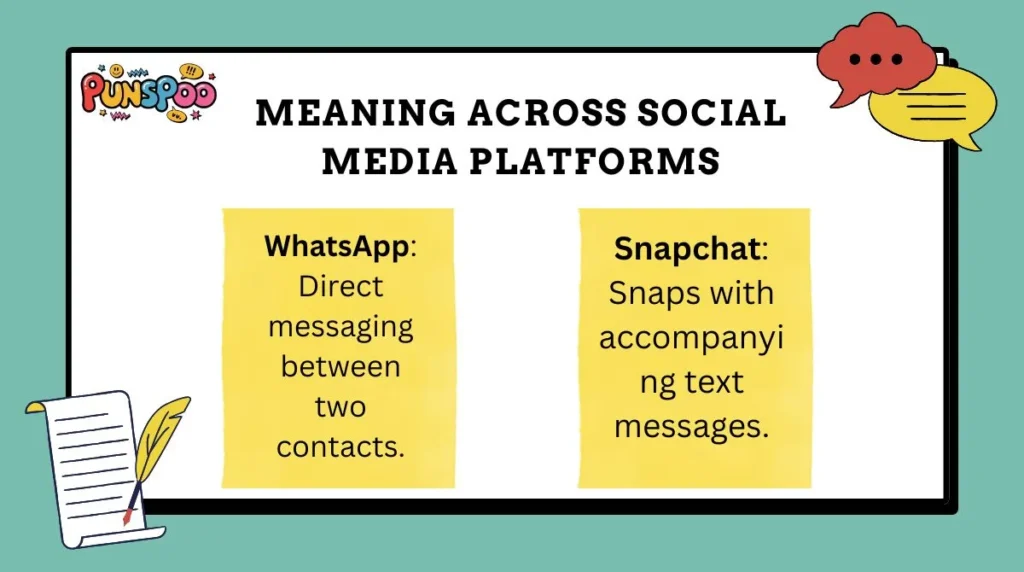
- WhatsApp: Direct messaging between two contacts.
- Instagram: DM exchanges or linking content in captions.
- TikTok: Comment threads or messaging videos.
- Snapchat: Snaps with accompanying text messages.
Each platform emphasizes text-based connection but in slightly different styles.
6️⃣ Technical, Scientific & Other Meanings
Beyond casual use, text to text appears in technical contexts:
- Education: Linking one literary or informational text to another.
- Technology: Converting information between text formats.
- Programming: Sending text data from one system to another.
7️⃣ Common Misunderstandings & Wrong Usage ❌
- Thinking it only refers to texting between people.
- Using it for voice or video calls (incorrect).
- Assuming it’s slang for copying text (it’s not plagiarism).
Tip: Always consider context before using it.
8️⃣ Similar Words & Alternatives 📊
| Word/Phrase | Meaning | Usage Difference |
|---|---|---|
| Message-to-message | Similar, but less academic | Casual texting only |
| Text exchange | Direct text sharing | Informal |
| Text link | Connecting information between texts | Academic / tech |
| Chat | Informal conversation | Not always formal or comparative |
9️⃣ Difference Between Text to Text & Similar Terms
- Text to text: Can be academic, professional, or casual; connecting texts or conversations.
- Text exchange: Strictly informal; back-and-forth chatting.
- Text link: Mainly academic or tech; connecting content between written texts.
🔟 How to Use It in a Sentence
💬 “Hey, let’s do a text to text about the project tomorrow.”
💬 “Our text-to-text yesterday cleared so many doubts!”
💬 “I enjoy late-night text-to-text chats with friends 😌”
💬 “Text to text, the assignment references are from two books.”
1️⃣1️⃣ How to Reply When Someone Uses This Word
- “Sure! Text to text works for me 👍”
- “Got it, let’s connect via text-to-text later.”
- “Absolutely, text to text saved me so much time.”
1️⃣2️⃣ Meaning in Online Dating & Social Conversations ❤️
- Used to flirt, share interest, or connect emotionally without meeting in person.
- Indicates preference for written communication over calls.
- Can build anticipation or maintain casual connection.
1️⃣3️⃣ Popularity & Trend Over Time 📈
- Google Trends shows rising searches in 2023–2026.
- Especially popular among students, professionals, and Gen Z social media users.
- Trending due to reliance on text-based communication in daily life.
1️⃣4️⃣ Why This Word Is Trending in 2026
- Increasing use of AI chat, online courses, and remote work.
- Memes and social media posts reinforce text-based communication culture.
- People prefer quick, clear, and recordable messages.
1️⃣5️⃣ Pros & Cons of Using This Term
Pros:
- Clear, versatile, works academically and socially.
- Fits casual, professional, and online communication.
Cons:
- Can confuse those unfamiliar with the phrase.
- Misused in voice/video contexts.
FAQs
Q1: What does text to text mean in school?
A: Relating one text to another for understanding, analysis, or comparison.
Q2: Is text to text only casual texting?
A: No, it can be academic, professional, or casual.
Q3: Can I use text to text in social media captions?
A: Yes, often for relatable or trendy posts.
Q4: Is it a new term?
A: It has existed academically for decades, but social usage increased recently.
Q5: How do I know if I’m using it correctly?
A: Check if it refers to text-based connection or conversation, not calls or video chats.
Conclusion
Understanding text to text meaning helps navigate the modern world of digital and academic communication.
It’s not just a term—it represents the way people connect, relate, and share information via written messages.
From casual chats with friends to professional reports and social media captions, mastering this term ensures clarity and effective communication.
Whether you’re analyzing literature, replying to a friend, or posting on Instagram, using “text to text” correctly makes your interactions smarter, relatable, and trend-savvy.
So next time you see it, you’ll know exactly what it means—and how to use it confidently.

“I’m Maria James, weaving playful word-magic into every pun I craft at PunsPoo. I love turning language upside down and making you smile one clever twist at a time.”