If you spend time texting, chatting, or scrolling through social media, you’ve probably seen the abbreviation “YK” pop up in messages.
People search for yk meaning in text because it’s short, casual, and often confusing—especially for those who didn’t grow up with internet slang.
Sometimes it feels friendly, sometimes dismissive, and sometimes just lazy typing. So what does it actually mean?
In today’s fast-paced digital world, abbreviations save time and add tone to conversations. “YK” is one of those tiny expressions that can carry big meaning depending on context.
Understanding it helps you avoid misunderstandings, reply better, and sound more natural in chats.
This guide explains everything—from its meaning and origin to how it’s used on WhatsApp, Instagram, TikTok, and even dating apps—using simple, clear language anyone can understand.
1️⃣ Meaning & Definition of YK
The most common yk meaning in text is:
YK = “You Know”
It’s a shortened form people use while texting or chatting online. Instead of typing two full words, they just type “yk” to keep the conversation flowing.
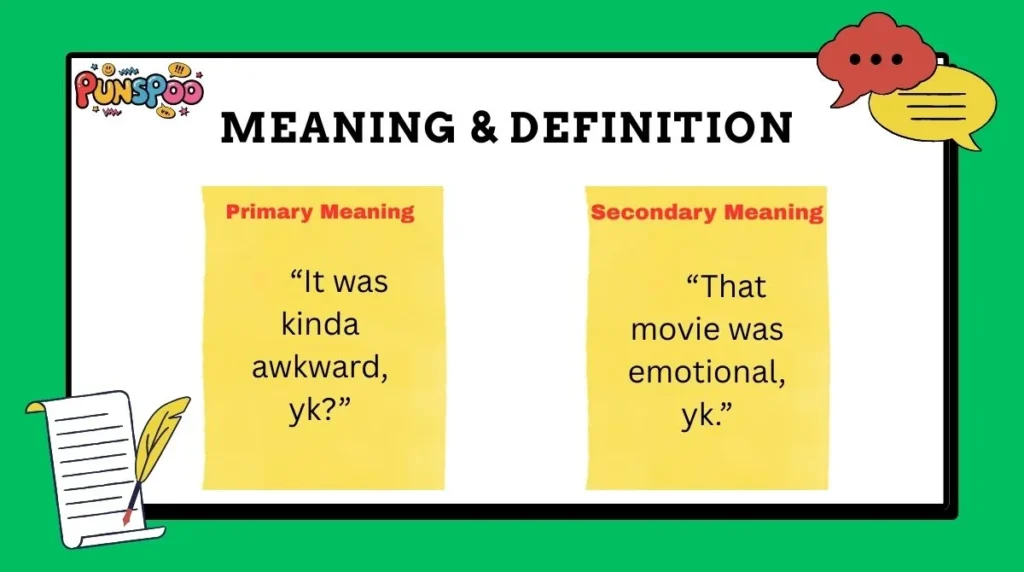
Primary Meaning
- “You know” — used to assume shared understanding
👉 “It was kinda awkward, yk?”
Secondary Meanings
- Agreement or emphasis
👉 “That movie was emotional, yk.” - Soft explanation or clarification
👉 “I was busy with work, yk, deadlines and stuff.”
“YK” doesn’t usually stand alone. It supports a sentence and adds a conversational, human tone. It often signals that the speaker expects the other person to relate or understand without extra explanation.
2️⃣ Origin & Background of the Term
“YK” didn’t come from a dictionary or technical field. It evolved naturally from spoken English. People have always said “you know” in conversations to pause, emphasize, or connect emotionally.
When texting became popular:
- Long sentences became shorter
- Common phrases turned into abbreviations
- “You know” became “yk”
Its roots are:
- Casual spoken English
- Early SMS culture
- Instant messaging platforms
Unlike slang created by specific communities, “yk” spread organically. Anyone typing fast eventually adopted it. That’s why it feels natural and widely understood today.
3️⃣ What Does It Really Mean in Daily Life?
In real life, yk is less about literal meaning and more about connection. It shows emotion, relatability, or shared experience.
When someone uses “yk,” they are often saying:
- “I don’t need to explain everything”
- “You can relate to this”
- “We’re on the same page”
Emotionally, it can feel:
- Friendly 😊
- Casual 😌
- Slightly vulnerable 💭
Example:
- “I didn’t reply earlier… yk how Mondays are.”
Here, “yk” creates understanding without over-explaining. That’s why people love using it—it feels human.
4️⃣ Usage in Different Contexts
Casual Chatting
- “I was tired, yk?”
- “It’s just one of those days, yk.”
Professional / Workplace
- “The timeline is tight, yk, due to approvals.”
⚠️ Use sparingly; informal tone.
Social Media Captions
- “Late nights, early mornings, yk ✨”
Text Messages
- “Didn’t mean it like that, yk 😅”
5️⃣ Meaning Across Social Media Platforms 📱
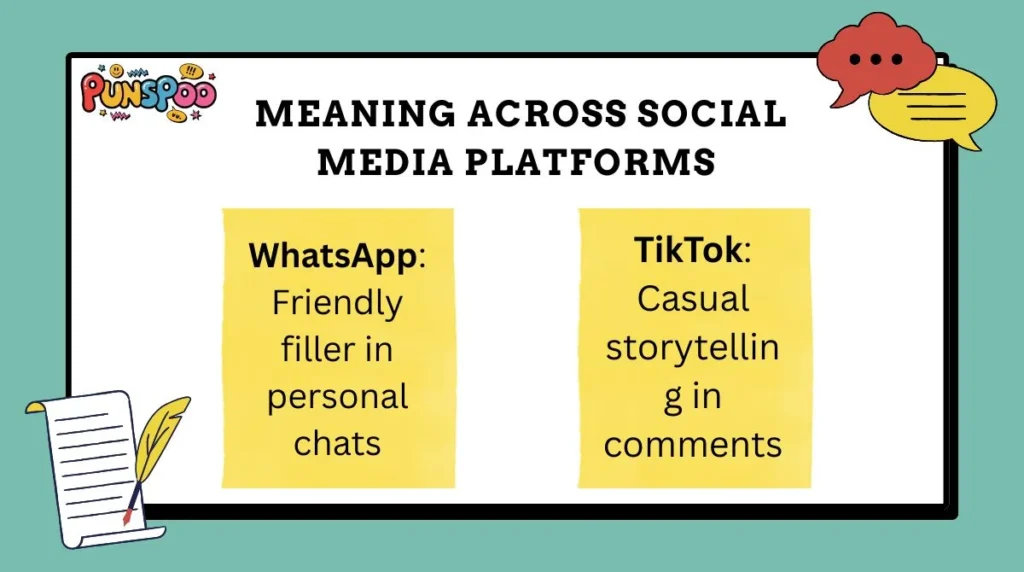
- WhatsApp: Friendly filler in personal chats
- Instagram: Adds emotional tone to captions and DMs
- TikTok: Casual storytelling in comments
- Snapchat: Quick, informal expression between friends
Same meaning everywhere—only tone changes.
6️⃣ Technical, Scientific & Other Meanings
In most cases, yk has no technical meaning. However:
- YK can appear as initials (names, codes)
- Rarely used in science or medicine
- Context usually makes it obvious
If it’s lowercase in chat → it means “you know.”
7️⃣ Common Misunderstandings & Wrong Usage ❌
People often misunderstand “yk” as:
- A question ❌ (It’s not)
- A replacement for “okay” ❌
- Rude or lazy ❌
Wrong usage:
- “YK?” (Confusing)
- Overusing it in formal emails
Correct usage is subtle and supportive, not forced.
8️⃣ Similar Words & Alternatives
| Term | Meaning | Usage Difference |
|---|---|---|
| you know | Full form | Formal or spoken |
| ya know | Casual spelling | Very informal |
| I mean | Clarification | Explaining |
| right? | Seeking agreement | Question-based |
| kinda | Softening tone | Descriptive |
9️⃣ Difference Between YK & Similar Terms
- YK vs “I mean”
YK assumes understanding; “I mean” explains. - YK vs “right?”
YK is passive; “right?” asks for response.
🔟 How to Use It in a Sentence
💬 “It felt weird, yk 😬”
💬 “I was busy, yk, family stuff.”
💬 “That song hits different, yk 🎧”
💬 “Didn’t wanna overthink it, yk.”
1️⃣1️⃣ How to Reply When Someone Uses YK
- Agree: “Yeah, totally.”
- Relate: “I get it.”
- Light reply: “Haha, yk 😄”
1️⃣2️⃣ Meaning in Online Dating & Social Conversations ❤️
In dating chats, yk:
- Softens emotions
- Makes messages less intense
- Shows comfort and familiarity
Example:
- “I don’t usually open up like this, yk.”
1️⃣3️⃣ Popularity & Trend Over Time 📈
“YK” has grown with:
- Messaging apps
- Short-form content
- Casual online communication
It remains popular because it feels natural and effortless.
1️⃣4️⃣ Why This Word Is Trending in 2026
- Faster texting culture
- Reel and story captions
- Gen Z minimal language
- Meme-friendly expression
Short words win online.
1️⃣5️⃣ Pros & Cons of Using YK
Pros
- Natural tone
- Friendly
- Saves time
Cons
- Too casual for formal writing
- Can sound vague if overused
FAQs
Q1: What does yk mean in texting?
It means “you know.”
Q2: Is yk rude?
No, it’s casual and friendly.
Q3: Can I use yk professionally?
Only in informal internal chats.
Q4: Does yk mean okay?
No, it means shared understanding.
Q5: Is yk a Gen Z word?
Popular with Gen Z, but used by all ages.
Conclusion
Understanding the yk meaning in text helps you read conversations more accurately and reply with confidence.
At its core, “yk” simply means “you know,” but emotionally it does much more. It builds connection, softens statements, and makes digital communication feel more human.
While it’s perfect for casual chats, social media, and dating conversations, it should be used carefully in professional settings.
Language online keeps evolving, and small abbreviations like “yk” show how people value speed, relatability, and tone.
Now that you know exactly what it means and how to use it, you can text smarter—and sound more natural—without overthinking it.

“I’m Maria James, weaving playful word-magic into every pun I craft at PunsPoo. I love turning language upside down and making you smile one clever twist at a time.”